
Synthesis Guide: How It Works in The Withered World
Parents, families, talent inheritance and Plus Value explained with the publisher's own rank-jump example, plus the order that keeps good talents alive.
Quick answer: Synthesis consumes two parents and produces a set of possible children, usually from one parent's family. The child inherits talents, and Plus Value raises its base stats and can push it a rank above its parents. The full G-rank matrix is on the synthesis list page →.
Everything else in this game is downstream of this system. Ranks above F are not found in the wild at a useful rate, so the team you finish the story with is the team you built.
What are the actual rules?
| Rule | Detail |
|---|---|
| Parents | Two monsters, both consumed |
| Children | The game shows a set; you pick one |
| Family | Usually inherited from one parent |
| Rank | Usually the higher of the two parents, sometimes lower |
| Talent inheritance | Child keeps talents from its parents |
| Plus Value | Rises with synthesis; adds to base attributes and can force a rank-up |
| Large monsters | Can be parents; size is inherited separately |
The family rule is the one worth internalising: combining a Slime with a Dragon tends to give you a Dragon or a Slime child, not a hybrid. The matrix is essentially a lookup of family pair to result.
What does Plus Value actually do?
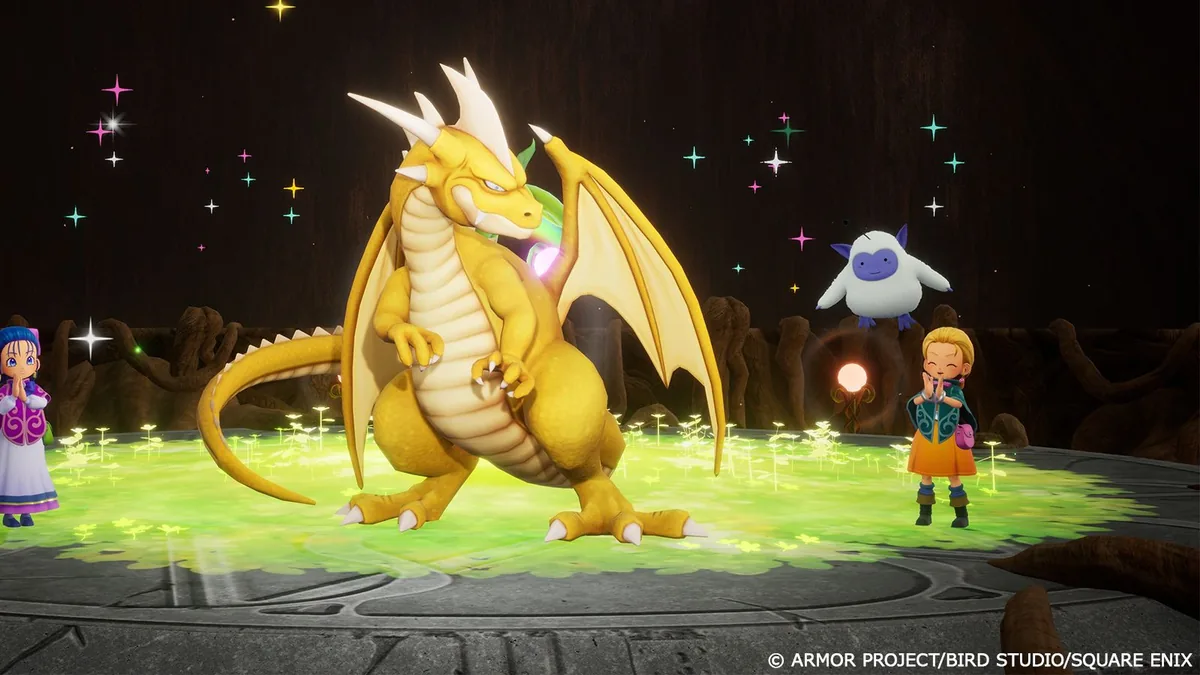
Plus Value is a multiplier on base attributes, and it is the difference between a rank F monster that survives the mid game and one that does not. Two monsters of the same species and level can differ by a wide margin purely on Plus Value.
The important consequence: a low-rank pair with high Plus Value can out-stat a high-rank pair with none. That is why the efficient route is to build a cheap G-rank pair, push its Plus Value up through repeated synthesis within the same family, and only then climb ranks.
When the child selection screen shows a plus symbol next to an option, that option outranks its parents. Treat those as the real progression and everything else as Plus Value farming.
How do rank jumps work?
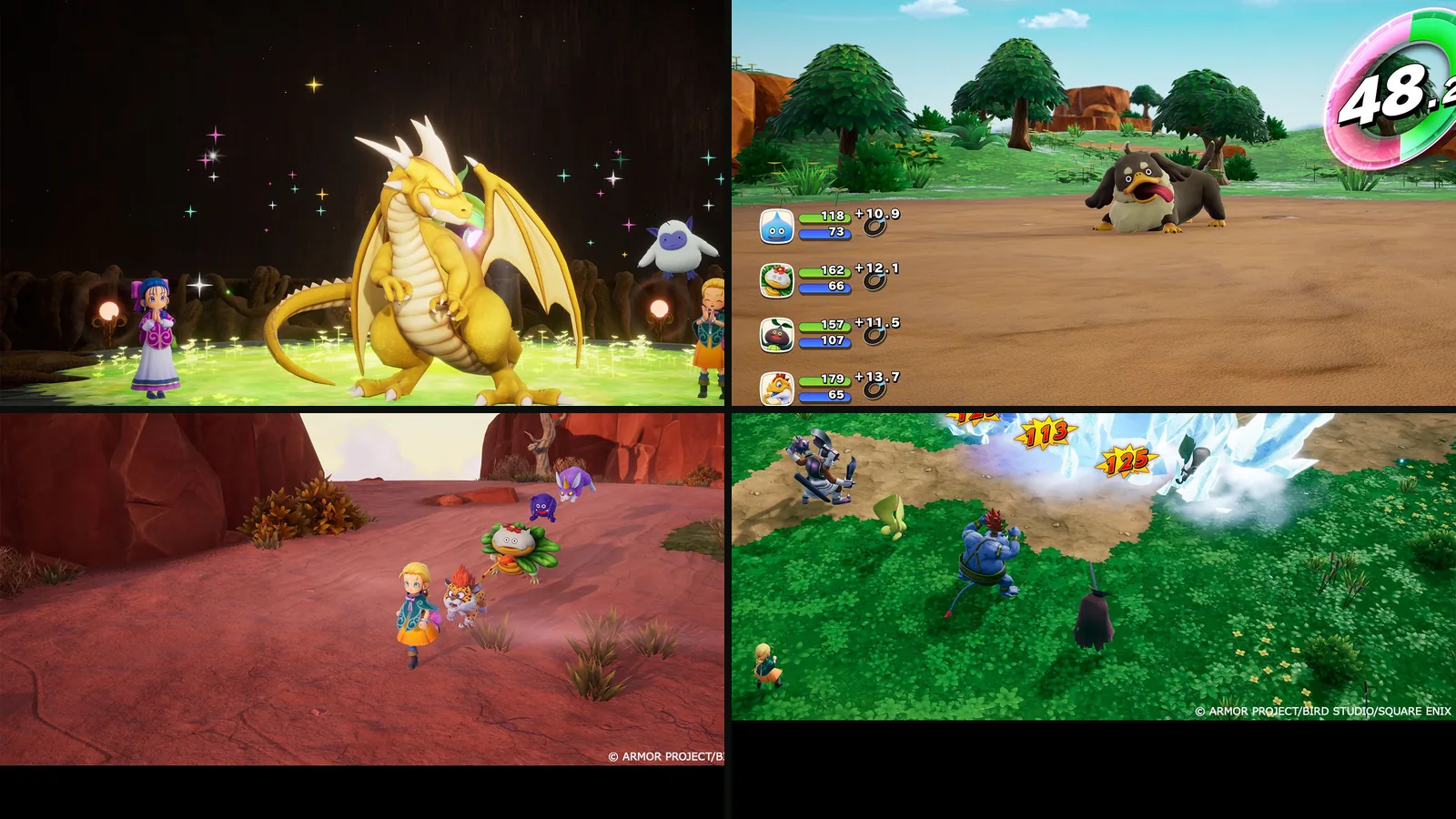
The publisher's example is the cleanest one available: Mud Mannequin at rank G plus Jumping Jackal at rank E can produce Well Wisher at rank D. That is a two-rank jump from a pair that includes a starter-tier monster, and it shows the pattern: the rank of the higher parent plus Plus Value plus family pairing determines whether you skip a tier.
In practice the demo produces most of its jumps at G to F. The demo synthesis guide → lists the chains that matter before the recruitment cap, and the synthesis list → shows the full G-rank matrix so you can plan the pair rather than guessing.
In what order should you synthesise?
The order that saves the most materials:
- Build Plus Value inside one family first. Cheap G-rank monsters of the same family are the cheapest Plus Value in the game.
- Keep one parent with the talent you want to pass on. Talents transfer, so the last pair before your target should include the talent carrier.
- Only then jump ranks. A rank jump built on a high-Plus parent produces a child that will not need replacing in two hours.
- Never synthesise your only copy of a species unless you have its parent recipe written down.
The fourth rule matters because the game does not warn you. Once a species is consumed, the only way back is to rebuild it from its parents, and if you have forgotten which pair made it, you are guessing.
How do talents pass down?
A monster can hold up to three talents. Talent points come from level-ups and are spent on skills and stat boosts inside the talent. When a monster is used as a parent, the child can inherit those talents, and a talent that was maxed out on the parent can arrive in an evolved form.
That is the real reason to level a monster before synthesising it, even though the levels themselves are lost. The talents guide → covers which talents are worth maxing before they go into a parent.
The single most expensive mistake in this game is synthesising a monster you just levelled for stats. Level for talent points, not for the stat line, and synthesise as soon as the talent you want is unlocked.
Does personality matter for synthesis?
It does not transfer, but it decides the child's growth curve, and a bad personality caps a good monster. If you are building a long-term team member, reroll or train the personality before you invest further synthesis into it. The personality guide → lists which ones are worth keeping for which role.
FAQ
Is synthesis the same as breeding? Yes. The series has used both words; the game's menus call it synthesis. Our breeding guide → covers why both terms show up in search results.
Do both parents have to be the same rank? No. Mixed-rank pairs are how you climb, and the higher parent usually sets the child's rank floor.
Can I undo a synthesis? No. Save before you commit if you are experimenting with a monster you cannot rebuild.
Do large monsters count as two parents? No. A large monster is one parent but occupies two party slots later.
Official source: DRAGON QUEST MONSTERS: The Withered World on Steam ↗ Official source: Square Enix game page ↗ Official source: Japanese official site ↗ Official source: Nintendo Switch 2 product page ↗